
Sex Offender Checks in Willacy County
The Texas Public Sex Offender Registry is the main official channel for a Willacy County registry search. Texas DPS maintains the public database. Local law enforcement registers people who live within its authority, verifies required details, and sends those details to DPS. No separate current Willacy County offender map or alert service was confirmed in the official county pages. The state registry should therefore lead a local check.
Prepare a name and spelling variants when checking a person. For an area review, use the county, address, ZIP, or map mode. A name query and a place query answer different questions. The first seeks a candidate; the second shows public registrations tied to a location. Neither is a fingerprint match. Confirm aliases, physical details, registering agency, and offense information before deciding that two records refer to the same person.
The official search screen shows how DPS separates those modes. View the Texas registry search source before using its controls.
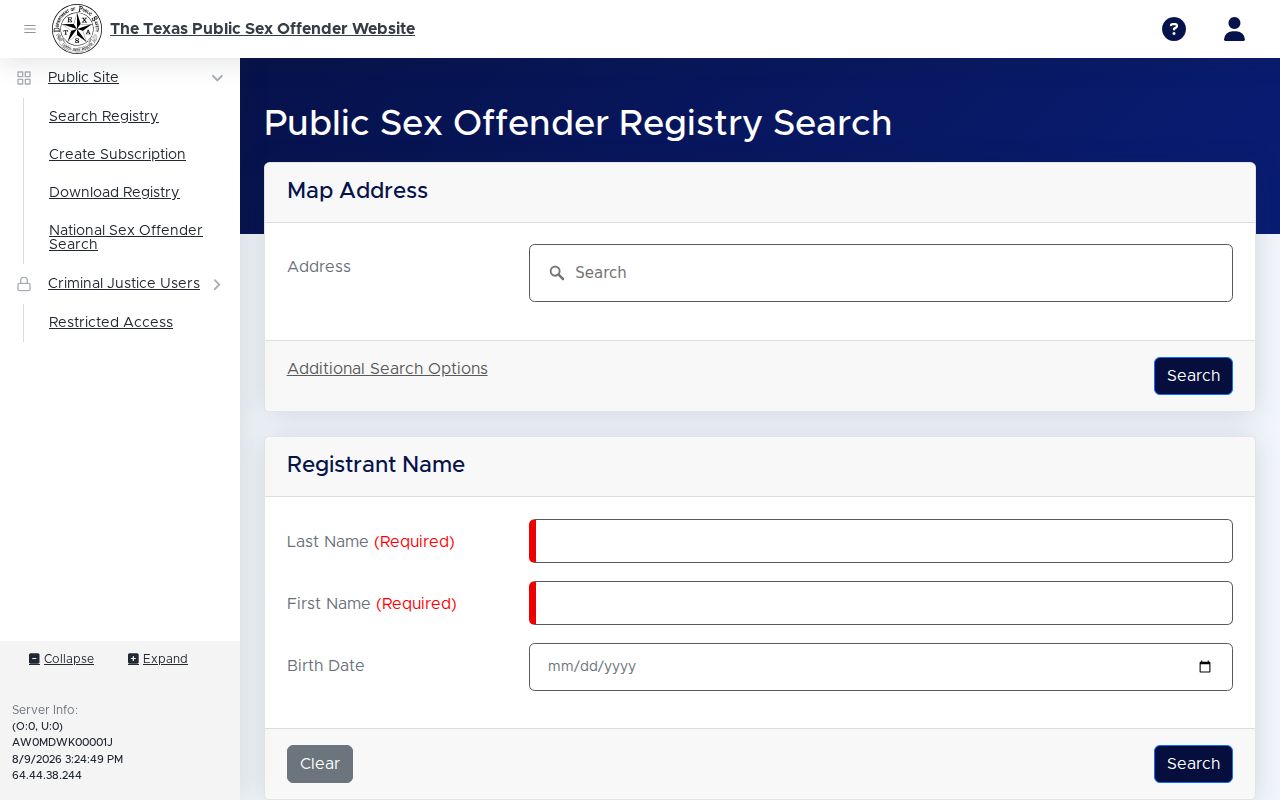
The interface places statewide public data behind one search, so selecting Willacy County is crucial for a county list.
Choose a Willacy County Registry Mode
Name, address, ZIP, county, and map searches are not interchangeable. A name search works best when a legal spelling or alias is known. County and ZIP modes fit a broad community review. Address and map modes add proximity, yet a plotted point can imply more precision than the record supports. That matters in rural Willacy County, where a public profile may use a geographic description instead of a standard street address.
Compare the map pin with the written location. Roads, county lines, mail routes, and geocoding can shift the apparent point. If safety planning depends on distance, verify the text and the named registration authority rather than measuring only from the icon. DPS does not say that a pin is a survey. A place result also reflects present registration duties, not every past offense or every person who once lived nearby.
How to Search the Texas Public Sex Offender Registry
DPS provides the official search controls at no charge. Start narrowly, retain the query date, and check more than one identifier. The agency modernized its public interface in 2024, so labels or help text may change while the core modes remain. The following steps keep a Willacy County offender search tied to what the live system actually reports.
- Open the DPS public registry and choose name, address, county, ZIP, or map mode.
- Enter the known criteria. Select Willacy for a county-wide result, or use exact spelling for a name search.
- Review the candidate list. Compare aliases, photographs, descriptors, location, and registering authority.
- Open the full profile and note the offense, registration status, and verification details before relying on it.
The available control types help readers pick a sound query instead of forcing every check through a surname.
| Field or Mode | Type | Required | Use |
|---|---|---|---|
| Search by Name | Tab or mode | Mode dependent | Uses first and last name criteria; aliases and spelling matter. |
| Search by Address | Tab or mode | Mode dependent | Finds public records near a stated street address. |
| Search by County | Dropdown | Mode dependent | Select Willacy for the county list. |
| Search by ZIP Code | Text | Mode dependent | Runs a geographic query by ZIP. |
| Map Search | Map control | No | Shows proximity visually; verify pins against written data. |
| Submit or Clear | Buttons | Submit to search | Runs the query or resets the entered criteria. |
Willacy County Registry Reporting Flow
A public result begins with the local registration authority, not with a web crawler. Texas law requires the collection of registration information, and the local authority transmits it to DPS. DPS then provides Internet access through the statewide database. Schools receive notice when the statute requires it. For some civilly committed or high-risk arrivals, DPS may send English and Spanish postcards to nearby homes and businesses.
Registry flow: Willacy County registration authority › Texas DPS › public registry and required notice.
The DPS registration program page explains this public-notification role. Willacy County's official sheriff page supplies the verified local law-enforcement contact. Its official program view is shown below.
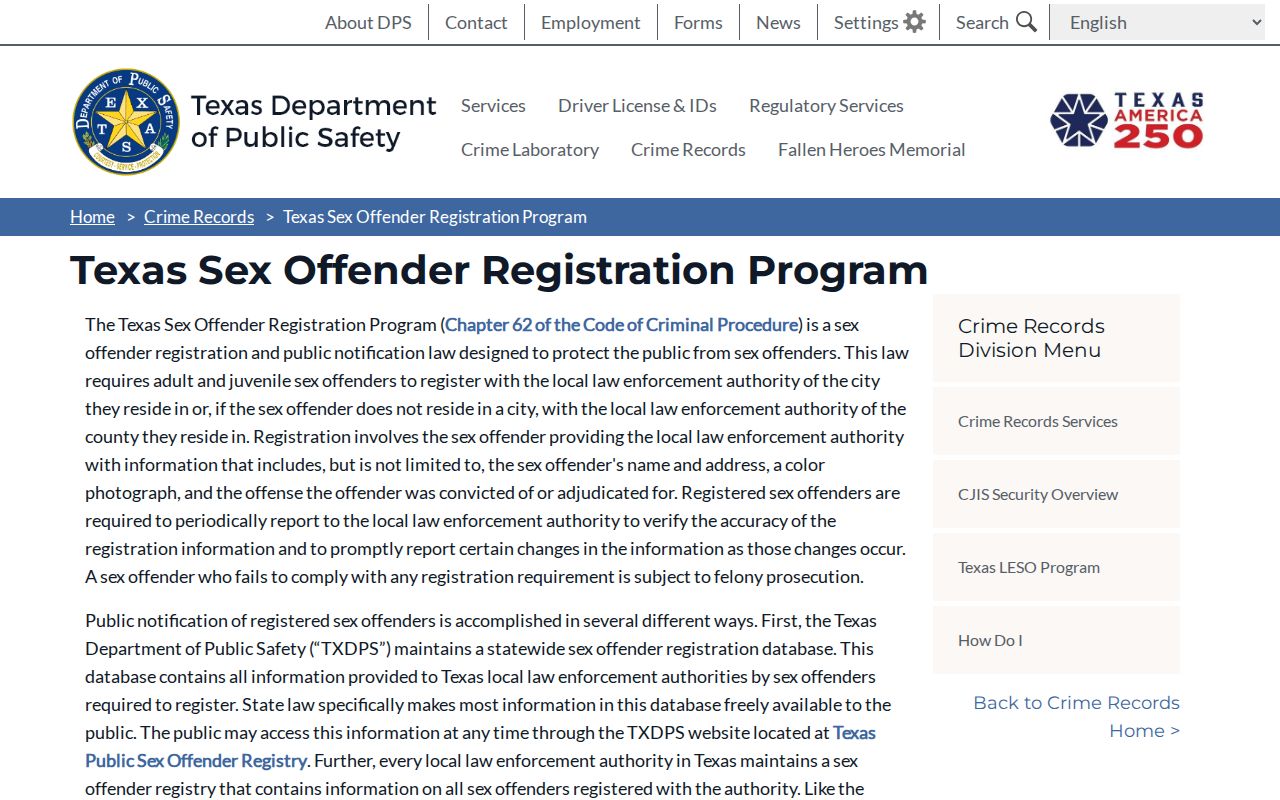
This chain also tells a reader where to report a possible factual error: contact the registration authority named on the profile, rather than confronting the registrant.
Inside a Registry Profile
A Texas public profile can combine identity, location, case, and registration fields. Not every collected item appears on every profile. Public display can include the registered name and aliases, a photograph, physical descriptors, a residence or geographic description, the registering agency, the reportable offense, conviction date, victim age category, punishment, release or supervision information, and current verification status. Limited vehicle data may appear for specified trafficking offenses.
Some data remains nonpublic. Texas DPS identifies Social Security and driver-license numbers, phone numbers, online identifiers, employer details, and victim-identifying information among protected fields. A court may also keep juvenile registration information nonpublic. The inventory below distinguishes likely public categories without implying that each row will be present for every Willacy County result.
| Name and Aliases | Registered identity and known aliases used to compare a candidate. |
|---|---|
| Photo and Descriptors | Photograph plus available sex, race, height, weight, hair, eye, and other physical details. |
| Residence | Public address or geographic description; rural entries may lack normal street precision. |
| Offense Record | Reportable offense, conviction date, victim age category, and punishment when displayed. |
| Agency and Status | Registering authority, supervision or release data, and registration or verification status. |
| Protected Fields | Personal identifiers, victim data, phone and online identifiers, and employer details are not public. |
The DPS registry FAQ gives the official public and nonpublic field distinctions.
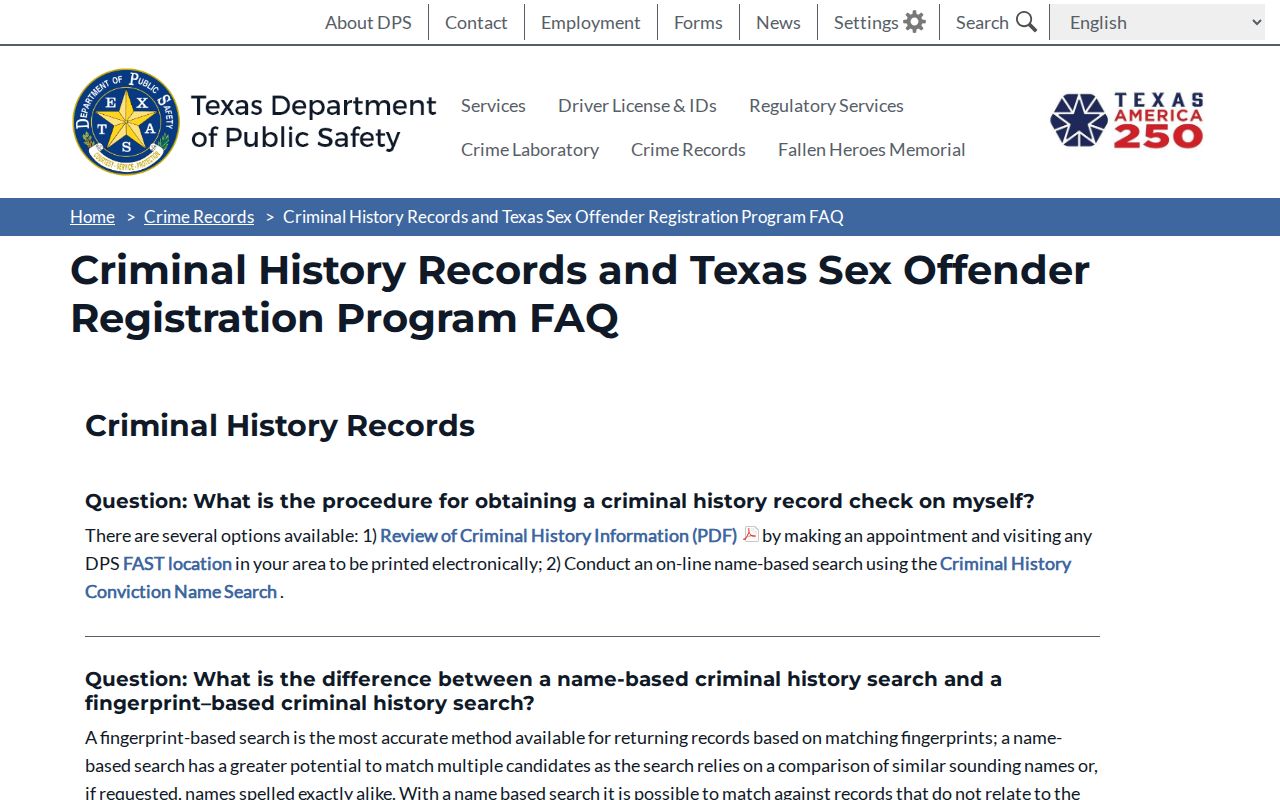
That distinction prevents a blank field from being read as proof that the underlying information was never collected.
Pair Willacy County Registry With NSOPW
A Texas-only check has a clear border. The National Sex Offender Public Website, operated by the U.S. Department of Justice, provides a nationwide supplement through participating jurisdictions. Use the Texas DPS registry for the most direct state record and NSOPW when a name, move, or address may cross state lines. Results can differ because jurisdictions set their own public rules and update cycles.
NSOPW does not turn a registry search into a full criminal-history check. It aggregates public registration sources. A missing name may reflect spelling, an alias, the query used, a nonpublic juvenile order, another jurisdiction's display rule, or no current public duty. It does not prove that no reportable or non-reportable criminal event ever occurred.
The national interface is visible through the official NSOPW search source.
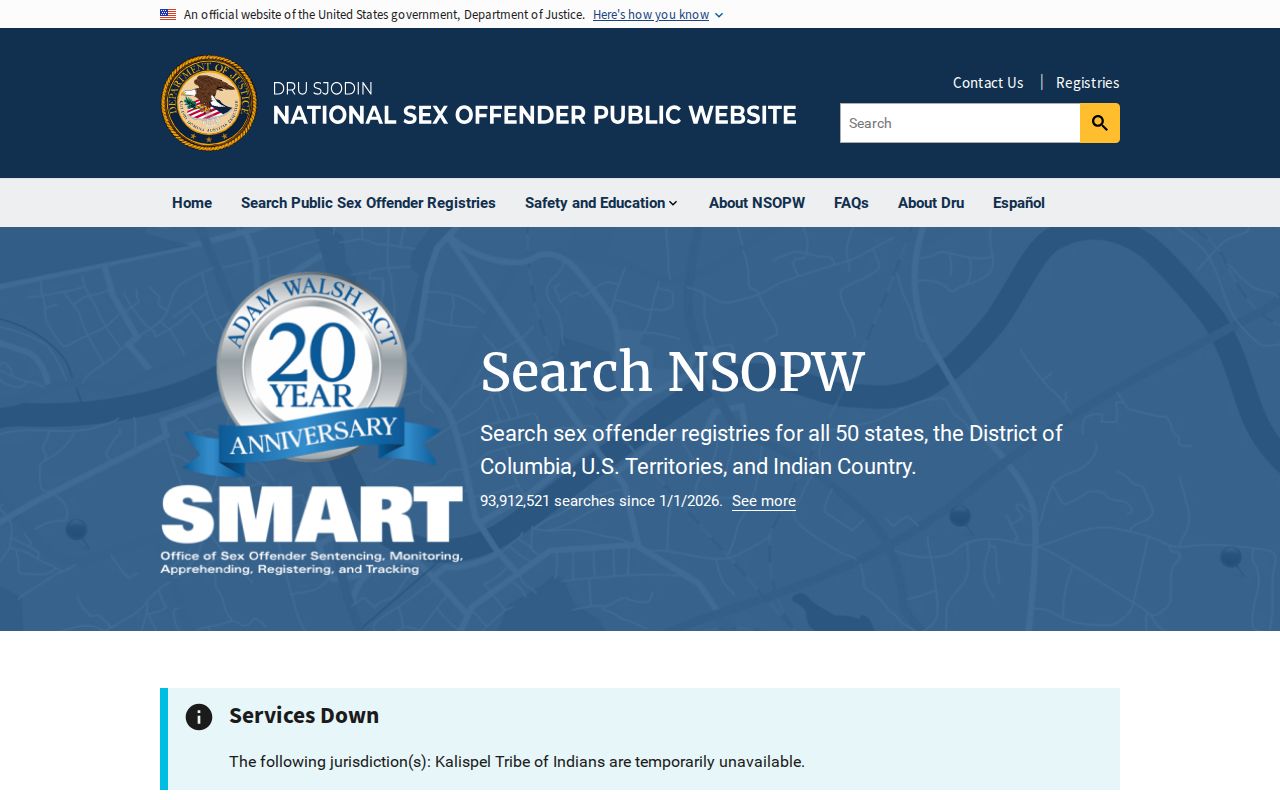
For a local address, compare any national candidate with the current DPS profile and its named registration authority.
Texas Registration Levels and Requirements
Texas does not use a simple public three-tier chart for every case. Article 62.101 instead assigns lifetime or ten-year and post-supervision periods based on the exact reportable offense or adjudication. Article 62.058 controls periodic verification. The correct duty comes from the applicable subsection and case facts, not from a profile reader's guess about the offense label.
Some categories have shorter check-in cycles. DPS states that a civilly committed sexually violent predator reports once in each 30-day period. A person with two or more sexually violent offenses reports once in each 90-day period. Other registrants follow the periodic schedule set by law and their classification. Failure to comply can be prosecuted as a felony under Article 62.102, with the degree tied to the duty and circumstances.
| Category | Duration | Verification |
|---|---|---|
| Reportable offense or adjudication | Lifetime or a ten-year/post-supervision period under Article 62.101 | Periodic reporting under Article 62.058 |
| Civilly committed sexually violent predator | Determine under the exact statutory subsection | Once each 30-day period |
| Two or more sexually violent offenses | Determine under the exact statutory subsection | Once each 90-day period |
The full Texas Code of Criminal Procedure Chapter 62 supplies the controlling text.
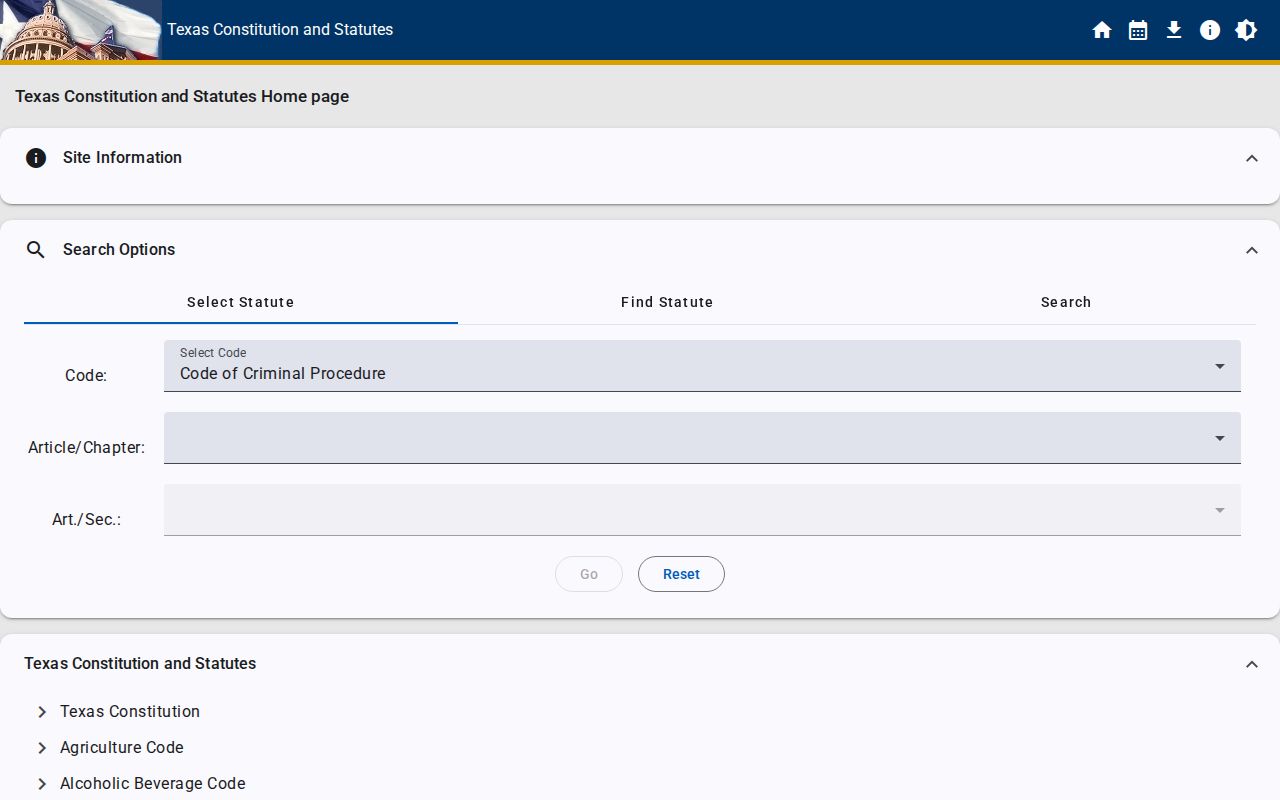
The statute is the right source when profile shorthand does not explain the duration or check-in schedule.
Willacy County Registry Result Limits
A zero-result screen answers only the query that was run. It can mean no current public Texas registration duty matched that name or place. It cannot certify a clean criminal history. A person may have a past case that did not create a present duty, a record in another state, a spelling variation, an alias, an order limiting public juvenile data, or a location that the chosen map query missed.
Try a second mode and keep the scope clear. Search the county for area awareness, a name for a known person, and NSOPW for the cross-state layer. If a specific result seems wrong, save the profile details and search date, then contact the listed registration authority. Do not use a supposed error as grounds for direct contact. Agency staff can check the source record and route a correction.
Willacy County Registry Notification
Public Internet access is one part of Texas notification. Local authorities maintain registrations, send required school notice, and supply DPS with the data used in public results. DPS may use bilingual postcards for certain civilly committed or high-risk people entering a community. The research did not confirm a separate Willacy County email or proximity-alert signup, so residents should not assume that a private alert or an unrelated mobile app is official.
Use the Willacy County department hub to identify a county office. Within Raymondville, the official police department page provides the city law-enforcement contact. Ask which authority owns the specific registration instead of assuming that the closest office maintains it.
Community awareness works best with calm verification. Read the public offense and status fields. Check the written location. Use the listed agency for factual questions. Call 911 only for an emergency. A registry record states a legal registration status based on past adjudication; it does not establish a new offense, current dangerousness, or permission to enter private property.
Community Notification and Lawful Use
The Texas registry exists for public awareness and safety planning. Families may use it to understand nearby public registrations and discuss safe boundaries. The data does not authorize threats, stalking, trespass, assault, discrimination, or public shaming. It also should not be copied into a private list that strips away DPS context, dates, and corrections.
Read Chapter 62 for the registry's public-access, collection, verification, duration, and compliance framework. Articles 62.005, 62.051, 62.058, 62.101, and 62.102 answer different parts of that framework. None grants a right to confront a person named in a public result.
Use registry data safely: Harassment, stalking, threats, assault, and misuse of information can be crimes under Texas law. Report suspected errors to the listed registration authority and emergencies to 911.